Continue with
Registration Number
Continue without
Registration Number
I Have
Brand new Car
Seeing white smoke from your car exhaust can be confusing, especially if you're unsure whether it's harmless or a sign of engine trouble. This guide explains the common causes, how to identify serious issues, and the steps you should take to protect your vehicle from costly repairs.
Not every puff of white smoke from your car's exhaust is a reason to panic. On a cold morning, it could simply be water vapour disappearing within a few minutes. But if you see a thick smoke that doesn't go away, or is driven by engine overheating or coolant loss, it is often a warning that something needs immediate attention.
Understanding the difference between normal exhaust steam and a genuine engine problem can save you from expensive repairs and unexpected breakdowns. In this Quickinsure blog, we will understand what every car owner should know.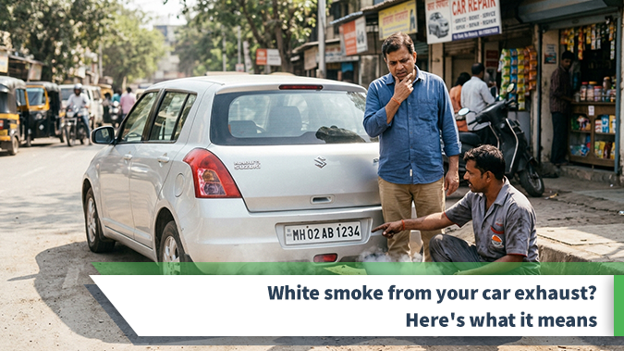
During winter or early mornings, it's normal to notice light white vapour from the exhaust for a minute or two. This happens because condensation inside the exhaust system turns into steam as the engine warms up.
However, if the white smoke from exhaust continues even after the engine reaches its normal temperature, it is worth investigating. Persistent smoke, especially when combined with engine overheating, poor performance, or a sweet smell, often points to an internal engine problem. Catching these signs early can prevent severe engine damage and reduce repair costs.
Several issues can cause white smoke from your car, and identifying the source is the first step toward fixing it. Here are some key causes that every car owner should take a note of:
● Condensation during cold starts is the most common and harmless cause.
● A coolant leak into the combustion chamber produces thick white smoke as the coolant burns with the fuel.
● A blown head gasket is one of the most common reasons behind continuous white smoke and should never be ignored.
● In rare cases, a cracked engine block or cylinder head can also allow coolant to enter the engine.
● For diesel vehicles, a faulty fuel injector can result in diesel white smoke, particularly during acceleration or startup.
The appearance and timing of the smoke can reveal a lot about the condition of your car. Thin white smoke that disappears quickly is considered harmless. On the other hand, thick white smoke while driving or white smoke that generates during the acceleration is the indication of mechanical issue.
Watch for additional warning signs such as:
● Falling coolant levels
● Milky engine oil
● Reduced engine performance
● Dashboard warning lights
If you notice two or more of these symptoms together, avoid delaying an inspection. Driving with these problems can lead to significant engine damage.
Start by checking your coolant level and engine oil. Low coolant without any visible external leak may indicate an internal engine problem.
If the smoke becomes dense or your engine temperature rises above normal, avoid driving the vehicle. Continuing to drive with engine overheating can turn a minor repair into a complete engine overhaul.
Instead:
● Inspect the engine bay for visible leaks.
● Monitor the temperature gauge.
● Perform a professional inspection as soon as possible.
● Repair the issue before it affects other engine components.
Many engine overheating causes and exhaust smoke problems can be prevented through routine maintenance. A few simple habits make a big difference, which include:
● Service your car according to the manufacturer's schedule.
● Regularly inspect the cooling system.
● Replace damaged gaskets and seals before they fail.
● Use the recommended engine oil and coolant.
● Never ignore warning lights or unusual exhaust smoke.
Preventive maintenance improves the reliability of a vehicle and helps avoid unexpected repair expenses.
The Bottom Line
White smoke from your exhaust is not always a sign of trouble, but it's never something to ignore completely. If it disappears after a cold start, it is usually harmless. However, continuous white smoke, especially when paired with engine overheating, coolant loss, or poor engine performance, requires immediate attention.
Keeping your car well-maintained is the best way to prevent costly engine repairs. Along with regular servicing, protecting your vehicle with the right insurance gives you added peace of mind. QuickInsure helps you compare car insurance plans from leading insurers, renew your policy online, and choose comprehensive coverage that fits your budget, making it easier to keep both your car and your finances protected.
Your car takes care of every journey you make. Return the favour with the right insurance from QuickInsure and stay protected against life's unexpected turns.
Yes, it can. If the white smoke is caused by an engine fault, your vehicle may not pass a pollution or fitness inspection until the issue is repaired.
It can in some cases. If water enters the engine or damages key components, it may lead to white smoke and serious engine problems.
Yes. Using the wrong or poor-quality coolant can affect your cooling system, increasing the chances of overheating and coolant leaks.
A little white vapour for the first few minutes is usually normal. If it continues after the engine has warmed up, it's best to have your car checked.
Yes, many roadside assistance plans can arrange towing if your car is unsafe to drive. Check your insurance policy to see what services are included.