
Continue with
Registration Number
Continue without
Registration Number
I Have
Brand new Car
A car clutch connects the engine and transmission to control power transfer. Learn how it works, its key components, common warning signs, and ways to extend clutch life.
If you drive a manual car, you use the clutch every time you start moving, stop, or change gears. Yet many drivers rarely think about what happens behind the clutch pedal. The clutch is a key part of the drivetrain because it controls how engine power reaches the transmission and, ultimately, the wheels.
In this Quickinsure blogpost, we will understand how a clutch works can help you recognize early signs of wear and avoid driving habits that can lead to expensive repairs.
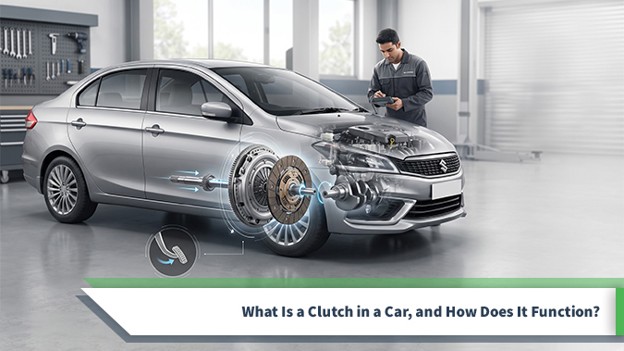
A clutch is a mechanical component that connects and disconnects the engine from the transmission. In simple terms, it allows the engine to keep running while you temporarily disconnect its power from the wheels.
When you press the clutch pedal in a manual car, the connection between the engine and transmission is disengaged. This allows you to change gears smoothly. When you release the pedal, the clutch gradually engages again and transfers engine power to the transmission.
In automatic cars, drivers do not operate a conventional clutch pedal. Depending on the transmission design, the vehicle uses systems such as a torque converter, dual-clutch gearbox, or other automated mechanisms to manage power transfer and gear changes.
The basic process is easier to understand through three stages:
When your foot is off the clutch pedal, the clutch connects the engine and transmission. Engine power can then reach the wheels.
When you press the pedal, the clutch separates the engine's rotating power from the transmission. This gives you the opportunity to change gears.
As you slowly release the pedal, the clutch reconnects the engine and transmission. Smooth engagement allows the car to move without excessive jerking or stalling.
This is why learning to release the clutch smoothly is important, especially in stop-and-go traffic or while driving on an incline.
A manual car clutch consists of several important parts:
● Clutch plate: Provides the friction surface that helps transfer engine power.
● Flywheel: Rotates with the engine and provides the surface against which the clutch plate engages.
● Pressure plate: Applies force to keep the clutch plate engaged with the flywheel.
● Release bearing: Helps disengage the clutch when the pedal is pressed.
● Clutch pedal and mechanism: Allows the driver to control clutch engagement and disengagement.
These components work together, so excessive wear in one part can affect the performance of the clutch system.
A clutch does not usually fail without giving some warning. Look out for signs such as:
● Clutch slipping: Engine speed rises but the car does not accelerate as expected.
● Difficulty changing gears: Gears feel difficult or rough to engage.
● Burning smell: Excessive clutch friction can produce a noticeable burning odour.
● Unusual noises: Grinding, rattling, or other unusual sounds when operating the clutch deserve attention.
● Vibrations or a high clutch pedal: Changes in pedal feel, shuddering, or vibrations can indicate clutch-related problems.
If these symptoms continue, getting the vehicle inspected by a qualified mechanic can help identify the cause before the problem becomes more serious.
Your driving habits have a direct effect on clutch wear. Avoid keeping your foot resting on the clutch pedal, riding the clutch in slow traffic, or holding the car on an incline using clutch slip. Use the handbrake when appropriate and release the clutch smoothly rather than unnecessarily revving the engine.
Clutch replacement is generally required when the components become excessively worn or the system no longer operates properly. The repair cost depends on the vehicle model, parts required and labour charges.
QuickInsure helps car owners understand and manage their vehicle insurance needs with convenient insurance solutions and useful information. Whether you are comparing car insurance options or reviewing coverage for your vehicle, QuickInsure makes the process easier.
Remember, mechanical repairs such as clutch replacement are different from insurance coverage. Your policy covers only losses and damages included within its terms and conditions.
The Bottom Line
The clutch plays a vital role in transferring engine power to the transmission in a manual car. Knowing how it works and recognizing symptoms such as slipping, difficulty changing gears, burning smells, and vibrations can help you address problems early.
Good driving habits and timely inspection can also help extend clutch life and keep your car running smoothly.
Get the Right Car Insurance for Your Vehicle
Looking for reliable protection for your car? Explore car insurance options with QuickInsure, compare suitable coverage, and choose a policy that fits your vehicle and driving needs.
Yes. A worn or slipping clutch can reduce efficient power transfer between the engine and transmission, which can contribute to higher fuel consumption.
Driving for a long time with a slipping clutch is not recommended. The issue can worsen over time and affect the car’s ability to transfer engine power properly.
Standard car insurance generally does not cover clutch replacement caused by normal wear and tear. Coverage depends on the policy terms and the cause of the clutch damage.
There is no fixed lifespan for a clutch. Its durability depends on the vehicle, driving habits, traffic conditions, and maintenance. Frequent stop-and-go driving and riding the clutch can lead to faster wear.
Yes. Ignoring a serious clutch problem can put additional stress on components such as the flywheel and transmission, potentially leading to more extensive repairs.