Continue with
Registration Number
Continue without
Registration Number
I Have
Brand new Car
Severe weather events can lead to unexpected and expensive damage to your car, especially during floods, storms, or earthquakes. This blog highlights how comprehensive car insurance provides protection in such situations, what steps are involved in filing a claim, and how you can choose the right coverage to stay financially secure during emergencies.
Natural disasters often arrive without warning. Heavy rainfall, flash floods, cyclones, landslides, earthquakes, and storms can cause severe damage to vehicles within minutes. For many car owners, the financial burden of repairing or replacing a damaged vehicle can be overwhelming.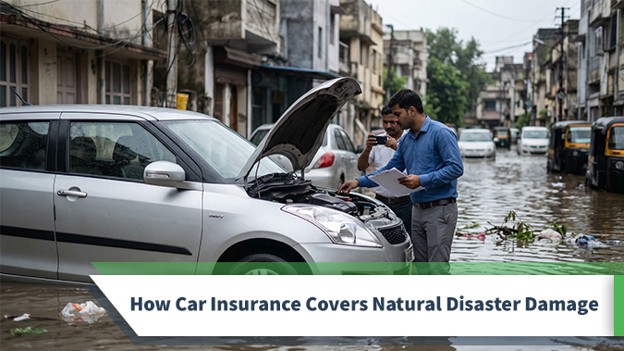
This is where the right car insurance policy becomes important.
Many drivers assume their standard car insurance policy covers all types of damage. However, protection against natural calamities typically depends on the type of coverage you have. Understanding what is covered, what is excluded, and how the claims process works can help you avoid unexpected expenses during emergencies.
In this Quickinsure guide, we will explain how comprehensive car insurance protects your vehicle against natural disasters and what steps you should take if your car suffers damage due to extreme weather conditions.
This answer depends on the type of policy you have. A third-party car insurance policy, which is mandatory in India, only covers damage caused to another person, vehicle, or property. It does not cover damage to your own car caused by floods, storms, or other natural events. To receive protection against natural calamities, you need comprehensive insurance coverage.
A comprehensive policy is designed to protect your vehicle against a wide range of risks, including:
● Floods and waterlogging
● Cyclones and storms
● Earthquakes
● Landslides and rockfalls
● Lightning strikes
● Fire caused by natural events
● Hailstorms
This broader car insurance coverage helps reduce the financial impact when unexpected natural disasters affect your vehicle.
Weather patterns across India have become increasingly unpredictable in recent years. Cities such as Mumbai, Chennai, Bengaluru, Delhi NCR, and Ghaziabad regularly experience heavy rainfall and waterlogging during monsoon seasons. Vehicles parked on roads, in basements, or near low-lying areas can suffer significant damage.
Repairing flood-damaged engines, electrical systems, wiring components, and interiors can cost thousands of rupees. A comprehensive car insurance policy provides financial protection in such situations, helping policyholders manage repair expenses without bearing the entire cost themselves.
More importantly, it provides peace of mind during uncertain weather conditions.
Among all natural disasters, floods are one of the most common causes of vehicle damage in India.
When water enters a vehicle, it can affect the following:
● Engine components
● Electrical systems
● ECU (Electronic Control Unit)
● Interior upholstery
● Transmission systems
● Sensors and wiring
Many people search for flood damage car insurance after their vehicle has already been affected. Unfortunately, insurance cannot be purchased after an incident to cover existing damage.
If your vehicle is already protected under a comprehensive policy, insurers generally cover flood-related damages subject to policy terms and conditions. However, policyholders should understand that negligence can sometimes affect claim eligibility.
For example, attempting to restart a vehicle while it is submerged in water may cause engine seizure, which could lead to additional complications during claim assessment.
While comprehensive insurance provides extensive protection, certain car insurance add-ons can strengthen your coverage further. Some useful add-ons include:
Floodwater can seriously damage an engine. Standard policies may not always cover every type of engine-related damage caused by water ingress. An engine protection add-on offers additional financial security in such situations.
Natural disasters can leave vehicles stranded in difficult locations. Roadside assistance helps arrange towing services and emergency support when needed.
This add-on helps reduce depreciation deductions during claim settlements, allowing policyholders to receive higher claim amounts for eligible repairs. Choosing suitable add-ons depends on factors such as location, weather conditions, and vehicle usage patterns.
Knowing how to respond after an incident can make the claim process smoother. If your vehicle is affected by a flood, storm, or other natural calamity:
Prioritize your safety and avoid entering dangerous areas simply to inspect vehicle damage.
Take clear photographs and videos from multiple angles. These records can support your insurance claim.
Report the incident as soon as possible. Delays in notification may create complications during claim processing.
Wait for the insurer's surveyor inspection before carrying out major repairs unless specifically instructed otherwise.
Submitting accurate documents and following insurer guidelines can help accelerate claim approval. Understanding how to claim car insurance after a natural disaster can significantly reduce stress during difficult situations.
Many policyholders worry about the paperwork involved in claims. Fortunately, the modern car insurance claim process is often simpler than expected.
Although procedures vary by insurer, the general steps include:
● Inform the insurance company
● Register the claim
● Submit photographs and required documents
● Vehicle inspection by a surveyor
● Repair approval
● Claim settlement according to policy terms
Quick action and proper documentation usually help ensure a smoother experience.
Choosing the right insurance policy is not always straightforward. Coverage benefits, exclusions, premiums, and add-ons can differ significantly between insurers. This makes comparing options important before purchasing a policy.
QuickInSure helps customers compare full-coverage car insurance and comprehensive policies from leading insurers in one place. With expert guidance, customers can:
● Compare multiple plans easily
● Understand coverage benefits clearly
● Evaluate useful add-ons
● Receive assistance during renewals
● Get support throughout the claims journey
This helps car owners make informed decisions and choose protection that matches their needs and budget.
The Bottom Line
Natural disasters cannot always be predicted, but their financial impact can often be managed with the right preparation.
A comprehensive car insurance policy provides valuable protection against risks such as floods, storms, earthquakes, landslides, and other natural calamities that could otherwise result in significant repair expenses.
Before the next monsoon season or extreme weather event arrives, it is worth reviewing your current policy and understanding exactly what protection it offers. Having the right coverage today can save considerable stress, time, and money tomorrow.
Weather can change overnight. Your financial protection shouldn't depend on luck. Compare comprehensive car insurance plans on Quickinsure and find coverage that helps protect your vehicle against floods, storms, and other natural disasters before they strike.
If you have a comprehensive car insurance policy, it generally covers damage caused by events such as floods, cyclones, storms, earthquakes, and landslides. A third-party policy, however, only covers damage caused to others and not your own vehicle.
Most comprehensive policies provide coverage for damage caused by floods, heavy rainfall, cyclones, storms, earthquakes, landslides, lightning, and fire triggered by natural events. The exact coverage may vary depending on your insurer and policy terms.
Engine damage caused by water entering the engine is often one of the most expensive repairs after a flood. In many cases, this type of damage is covered only if you have opted for an engine protection add-on along with your comprehensive policy.
Start by ensuring your safety and then document the damage with photos or videos. Inform your insurance company as soon as possible, avoid driving or restarting a waterlogged vehicle, and follow the insurer's instructions for inspection and claim processing.
Choosing a comprehensive car insurance policy is the first step. You can strengthen your coverage with useful add-ons such as engine protection and roadside assistance. It is also wise to renew your policy on time and park your vehicle in safer locations during extreme weather conditions.